
One of the most common questions for people discovering backgammon is:
How do you set up a backgammon board?
If you play backgammon online, this step is handled automatically by the software. But if you’ve just bought your first backgammon set — or found one in your attic — understanding how the board works is essential.
In this guide, we’ll explain everything you need to know about backgammon setup, from the equipment to the starting position of the checkers.
What Comes with a Backgammon Set?
A backgammon set is often presented as a folding case. Once opened, you’ll find several items needed to play.
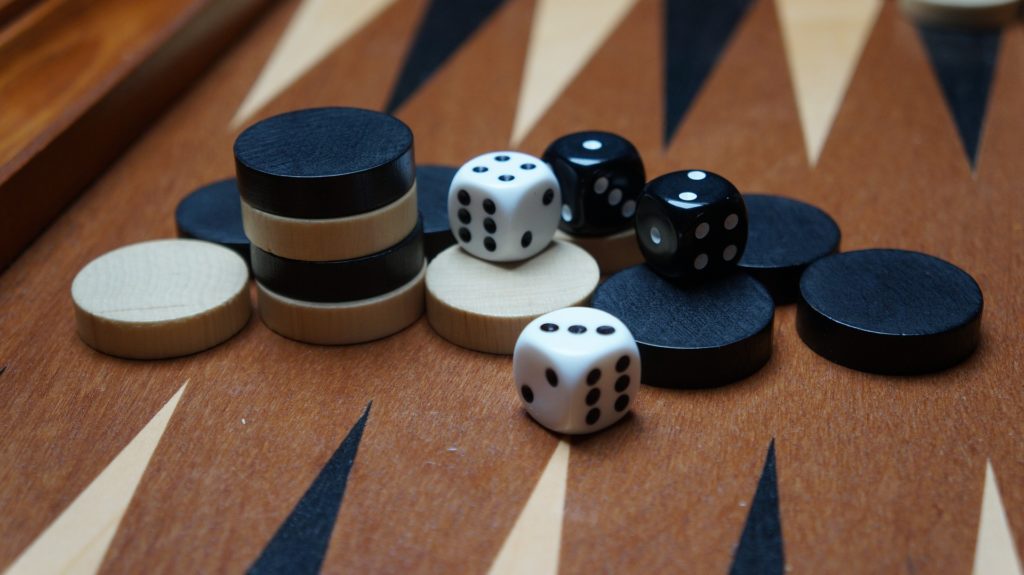
Checkers and Dice
Backgammon is a two-player game. Each player uses:
- 15 checkers of a single color
- Two dice to determine movement
Some sets include one pair of dice per player, while others provide a single shared pair.
Traditionally, dice are shaken in a cup before being rolled, rather than thrown by hand. That’s why most backgammon sets include two dice cups.
The Doubling Cube
Most modern backgammon sets also include a special die called the doubling cube (sometimes called the videau).
The doubling cube is used to increase the stakes during a game. While it’s not required for beginners, it becomes an important strategic tool as you gain experience.
If your set doesn’t include one, don’t worry — you can still play perfectly fine without it.
If you’re new to backgammon, practicing a few games online can help you understand board orientation and checker movement much faster.

How Is the Backgammon Board Designed?
A backgammon board is made up of 24 long triangles, called points. These points are where the checkers move during the game.
In the center of the board is a vertical divider known as the bar. When one of your checkers is hit by your opponent, it is placed on the bar and must re-enter the board before you can make any other moves.
Board Layout
The 24 points are divided into four groups of six points:
- Your home board (inner board)
- Your outer board
- Your opponent’s home board
- Your opponent’s outer board
When facing the board:
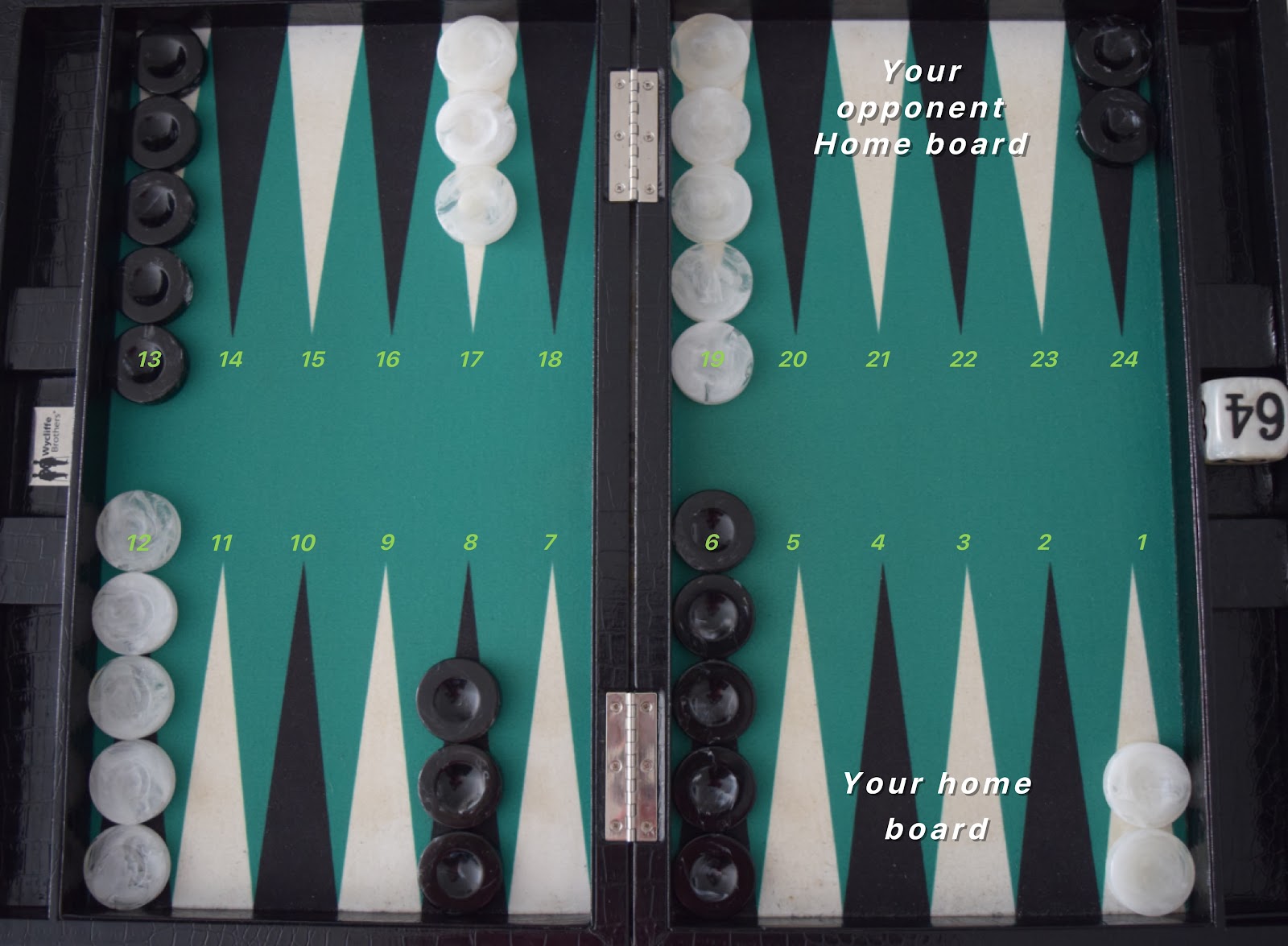
- The bottom right quadrant is usually your home board
- The top right quadrant is your opponent’s home board
You move your checkers clockwise, while your opponent moves counter-clockwise.
Points in the home board are numbered from right to left:
1, 2, 3, 4, 5, and 6
Your opponent’s numbering mirrors yours from their perspective.
Starting Position of the Checkers
Before starting a game, each player must place their 15 checkers in the correct starting position.
Your checkers are placed as follows:
- 5 checkers on the 6-point
- 3 checkers on the 8-point
- 5 checkers on the 13-point
- 2 checkers on the 24-point
Your opponent places their checkers symmetrically, facing you.
🎲 Free Printable
Free Backgammon Cheat Sheet (Printable)
New to backgammon? Download this free printable and keep it beside you while you play — covers movement, the bar, bearing off, scoring, and the doubling cube.
Instant PDF • Printable • Beginner friendly
Board Orientation Variations
It’s important to know that the board can be set up in either direction.
Some players prefer their home board to be:
- Points 1–6 (as shown in most diagrams)
- Others prefer points 7–12, depending on how the board is oriented
Both setups are perfectly valid as long as:
- The correct number of checkers is placed on the correct points
- Both players agree on the direction of movement
Our advice: get comfortable with both orientations. This avoids confusion when playing opponents who set up the board differently.
What’s Next?
Now that your board is correctly set up, you’re ready to:
- Learn how the checkers move
- Understand hitting and re-entry
- Discover how bearing off works
👉 Learn the Basic Backgammon Rules
👉 Explore Backgammon Strategy
May the dice be with you!
Do you know the reasons or the history behind why the pieces are setup they way they are? It seems at least somewhat arbitrary to me. Thank you.